Varsity Tech Uses AI Agents to Run Systematic Trading With Three People
- Cargo
- Markets
- Shipped
- Shipper
- Rowen Brooks
- Readers
- 625
Varsity Tech’s agents handle research and testing, while three people set limits and decide what trades go live.
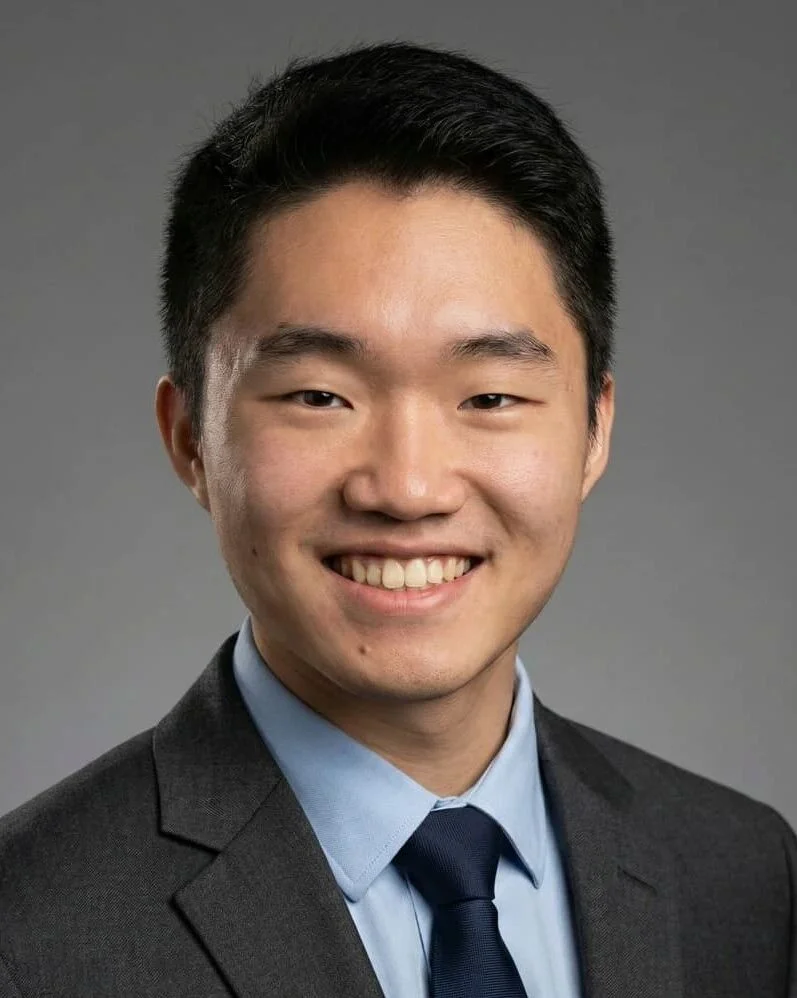
Varsity Tech’s small team relies on AI agents to handle much of the research and testing behind its systematic trading. The division of responsibility is central to the model: agents can generate and assess strategies, but people set the boundaries, judge whether results hold up and decide what enters live trading.

Founder Daniel Tan says the system takes on work that a conventional quant operation might distribute among data, research, software, execution and risk specialists. Varsity Tech’s agents clean and analyse data, run statistical work, write code and backtest strategies. People supply the original ideas and market insight, then review what the system produces.
“The agents build on each idea, draw parallels across markets, write the code and test it,” Tan said. “What stays human is judgement. We set the guardrails and the validation layers that decide whether a result holds up or is just overfit, and we make the final decision on what goes live.”
Risk limits sit outside the agents’ control
The structure depends on limits that an agent cannot change. Each strategy has position sizing, a stop loss and a fixed number of attempts. Stop losses are routed through several separate paths. When prices move sharply, the execution system retries a stop automatically until it is filled.
There are also controls at the account and portfolio levels. The account’s daily loss cap is 1 per cent of the whole account, with enforcement at the broker. That placement is intended to keep the limit in force even if an upstream system fails. At portfolio level, a strategy is switched off when its losses exceed its historical maximum drawdown. Tan treats that threshold as evidence that live behaviour no longer matches the conditions established during validation.
“None of these limits can be overridden by an agent,” he said. That boundary matters because automated research can create many candidate strategies quickly. The system’s ability to generate ideas does not itself establish that those ideas are suitable for live use; each still has to clear the team’s checks and remain within preset limits.
Process shapes the operating model
Varsity Tech operates as a Singapore variable capital company under Peak Capital, which holds the capital markets services licence, with Varsity Tech acting as sub-investment manager. The arrangement places reporting, risk oversight and compliance processes outside the three-person founding team.
Tan said the operational workload was a surprise. “What surprised me most was how much of the work is documentation and process, not strategy,” he said. “The licence is the headline, but day to day it is about clear roles, audit trails and making sure the people who set risk limits are not the same people who generate the ideas.”
Tan has traded since 2020. The fund cannot publicly disclose official performance without approval, so the account he gives focuses on how decisions are made rather than returns. Strategies are developed and validated through the AI-driven pipeline, and the team does not place discretionary trades. Its work is to propose ideas, define risk limits and decide whether a strategy that has passed validation should go live.
Most candidate strategies are rejected
Overfitting has been the main failure mode. Agents can find patterns that appear strong in historical data but fail on new data, and most candidates do not reach live trading. Some strategies have gone live and then behaved differently from how they performed in testing. In those cases, the drawdown rule switched them off, Tan said, “before it turned into a real loss”.
Fast markets present a separate operational test. A stop may not fill on its first attempt when prices are moving sharply, which is why the execution system retries. The account-level cap at the broker provides another layer if the other controls are not enough. These mechanisms reduce the chance that one weak strategy or a difficult trading episode can exceed the team’s stated limits; they do not make test results a guarantee of future behaviour.
“The agents generate far more ideas than we could ever trade, so most of our job is saying no,” Tan said. That makes selection and validation the practical bottleneck. A larger flow of ideas can expand what the team examines, while also increasing the importance of rejecting patterns that may be specific to the data used to find them.
Small-team trade-offs and the next hires
A three-person operation gives up some of the challenge that comes from colleagues with different instincts examining the same strategy. It also has less backup when someone is unavailable. Varsity Tech tries to address part of that gap with adversarial agents designed to test strategies before approval, alongside fixed rules that the agents cannot override.
Tan says the first hires as the company grows would focus on infrastructure and operations: engineers to expand the data and execution systems, plus more support for risk and compliance. “We would hire people to strengthen the guardrails around the agents before we would hire more people to come up with ideas,” he said. That priority reflects the team’s view that capacity to test and control strategies needs to grow alongside the volume of research.
Varsity Tech also operates as a fintech company and aims to bring its product, Quandora, to more people interested in systematic trading. It is training in-house models and building a proprietary data set. Tan believes that data could become a major advantage as AI use expands, though the source gives no performance figures with which to assess the trading system’s results.
Tan was the first employee at Dott, the shared scooter and e-bike operator, before founding Varsity Tech. For the firm, the next measure of scale will be whether its infrastructure and oversight can keep pace with its agents’ output while preserving the human review and fixed limits that govern what reaches live trading.