Investment Adviser Small-Entity Threshold Rises to $1 Billion
- Cargo
- Banking
- Shipped
- Shipper
- Robert Martinez
- Readers
- 629
A new $1 billion cutoff expands the firms counted in small-entity reviews, bringing about 10,180 additional advisers into the analysis.
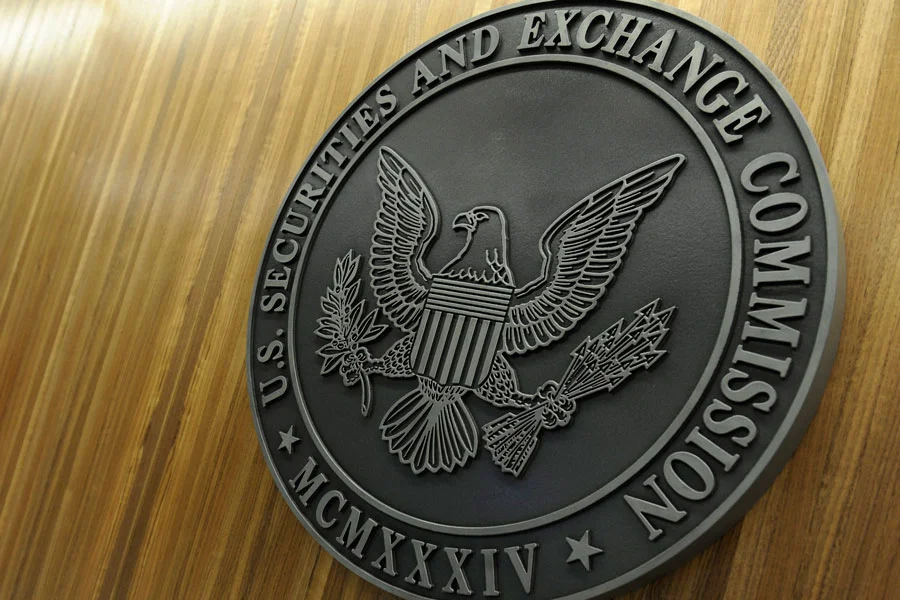
Raising the small-entity asset ceiling to $1 billion brings a much larger share of investment advisers into the group whose circumstances the Securities and Exchange Commission must assess when it develops rules. The change affects how the agency evaluates potential burdens on smaller firms; it does not change the requirements advisers must meet today.
The final amendment to Advisers Act Rule 0-7 lifts the prior cutoff from $25 million in regulatory assets under management (RAUM) and removes a separate test based on balance-sheet assets. The agency first proposed revising the definition in January. The final version also drops the requirement that a firm hold less than $5 million in total assets to qualify.
The Regulatory Flexibility Act of 1980 calls for agencies to examine the effects proposed rules may have on small businesses. When a proposal is likely to have a significant impact, agencies must consider less burdensome alternatives. Firms outside an agency’s small-entity definition receive less consideration in that process, so the revised cutoff widens the range of advisory businesses included in those assessments.
A long-standing definition reached few firms
The previous test dated to 1982 and was last revised in 1998. To qualify, an adviser had to manage less than $25 million, hold less than $5 million in total assets and avoid common control with a larger firm. At the time, the asset cutoff aligned with the minimum for federal registration. Congress later raised that registration minimum to $100 million, leaving the small-entity test tied to a much lower figure.
The old definition had become a narrow fit for an industry that had grown well beyond its original parameters. The Investment Adviser Association’s 2026 industry snapshot counted a record 16,544 SEC-registered firms in 2025. Just 536, or about 3%, met the former small-entity definition. By comparison, 67.4% of registered advisers, more than 10,500 firms, managed less than $1 billion that year.
The association also found that advisers below $1 billion accounted for almost all new SEC registrations, with new registrants representing over a quarter of firms in that asset group. That detail points to a structural feature of the market: smaller firms make up a substantial portion of the population, even though their combined assets are modest relative to the industry as a whole.
More firms enter the agency’s analysis
Under the final amendment, the agency estimates that 11,017 advisers will need to answer the small-entity questions in Item 12 of Form ADV. About 10,180 of those firms do not answer them under the current definition. The expanded count will give the agency a broader set of firms to consider when it weighs how proposed requirements may affect businesses with fewer assets under management.
The agency’s estimate also includes exempt reporting advisers. Counting those firms, the $1 billion threshold covers about 75% of advisers, which together hold less than 3% of the industry’s total regulatory assets. The figures capture a wide gap between the number of firms in the group and its share of industry assets: a large population of relatively small advisers represents only a small portion of aggregate assets.
That gap helps explain why the change matters for rulemaking analysis while leaving existing firm obligations intact. As Commissioner Mark Uyeda put it, “These changes do not alter any substantive requirement applicable to any firm.” He said the revised definition gives the Commission a framework to assess the effectiveness and efficiency of its regulations for smaller businesses, which may face a different relative burden from significantly larger firms.
Asset measure prevails over balance sheets and headcount
The Investment Adviser Association had asked the agency to revisit the definition. In its March comment letter, the trade group supported the proposed change and urged the agency to remove the $5 million balance-sheet test or raise it to $10 million. The final rule removes it. The agency reasoned that items such as leases and equipment reveal little about the scale of an advisory business.
A coalition that included the CFP Board and the Financial Planning Association proposed using employee count as another measure. The planning groups argued that firms with lean teams should be eligible for small-entity treatment. The agency declined, saying an employee-based measure could misrepresent firm size because advisers make extensive use of outsourced services. A headcount test could therefore classify similar businesses differently depending on how they arrange their staffing.
The agency also addressed confusion between the new $1 billion RAUM cutoff and the $100 million minimum for SEC registration. The amendment changes the definition used for small-entity analysis; it does not revise the registration minimum that determines whether an adviser is overseen at the federal or state level. The distinction matters because qualifying as a small entity under the revised test does not, by itself, determine an adviser’s registration status.
Commission Chair Paul S. Atkins described the update as a modernization of definitions that had not changed in nearly 30 years, saying it was intended to reduce unnecessary burdens. The amendment is scheduled to take effect 90 days after its adopting release appears in the Federal Register. For advisers, the immediate change is a broader set of firms answering Form ADV’s small-entity questions; the practical effect will depend on how the agency uses that expanded perspective in future rulemaking.


