Why Retirees May Spend Less Than They Planned—and What That Means for Saving
- Cargo
- Economy
- Shipped
- Shipper
- Financial Samurai
- Readers
- 541
A writer’s parents have pensions and a paid-off home, yet their appetite for travel and big purchases has faded. The experience raises questions about when to spend.
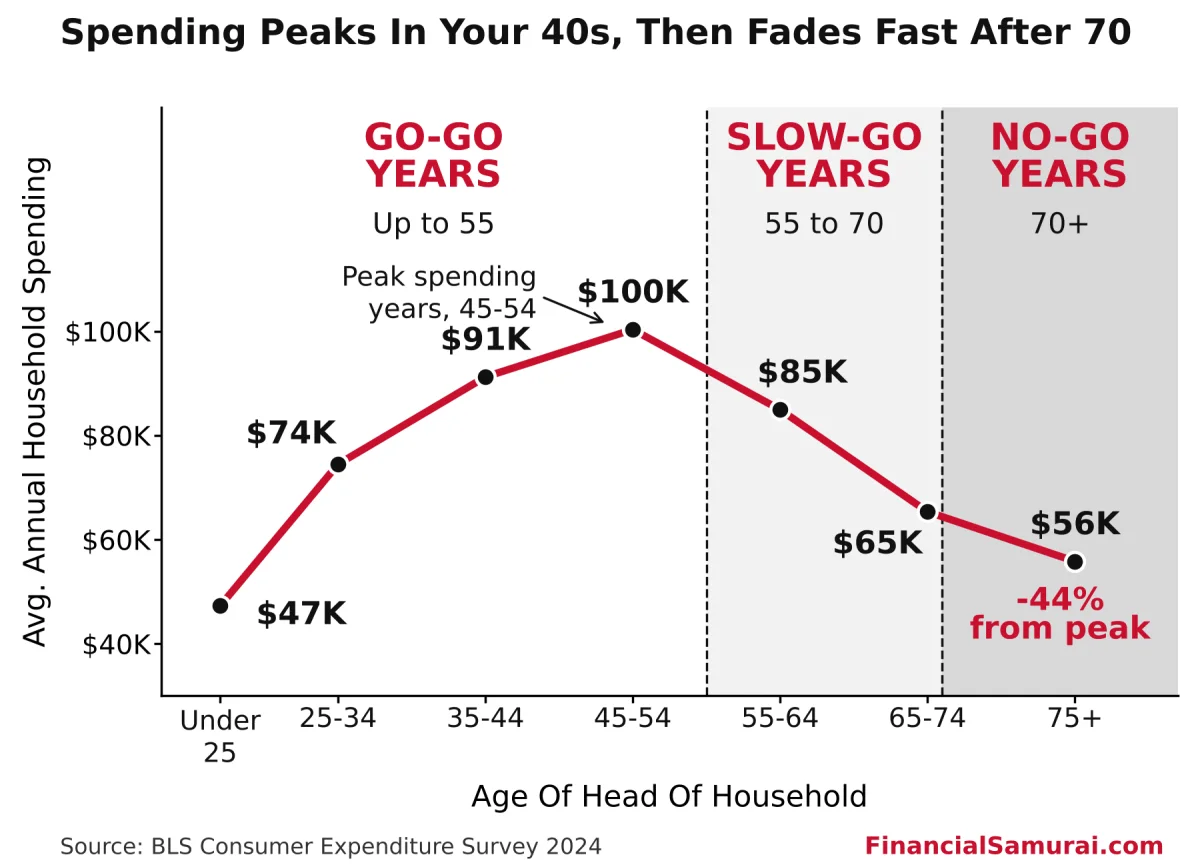
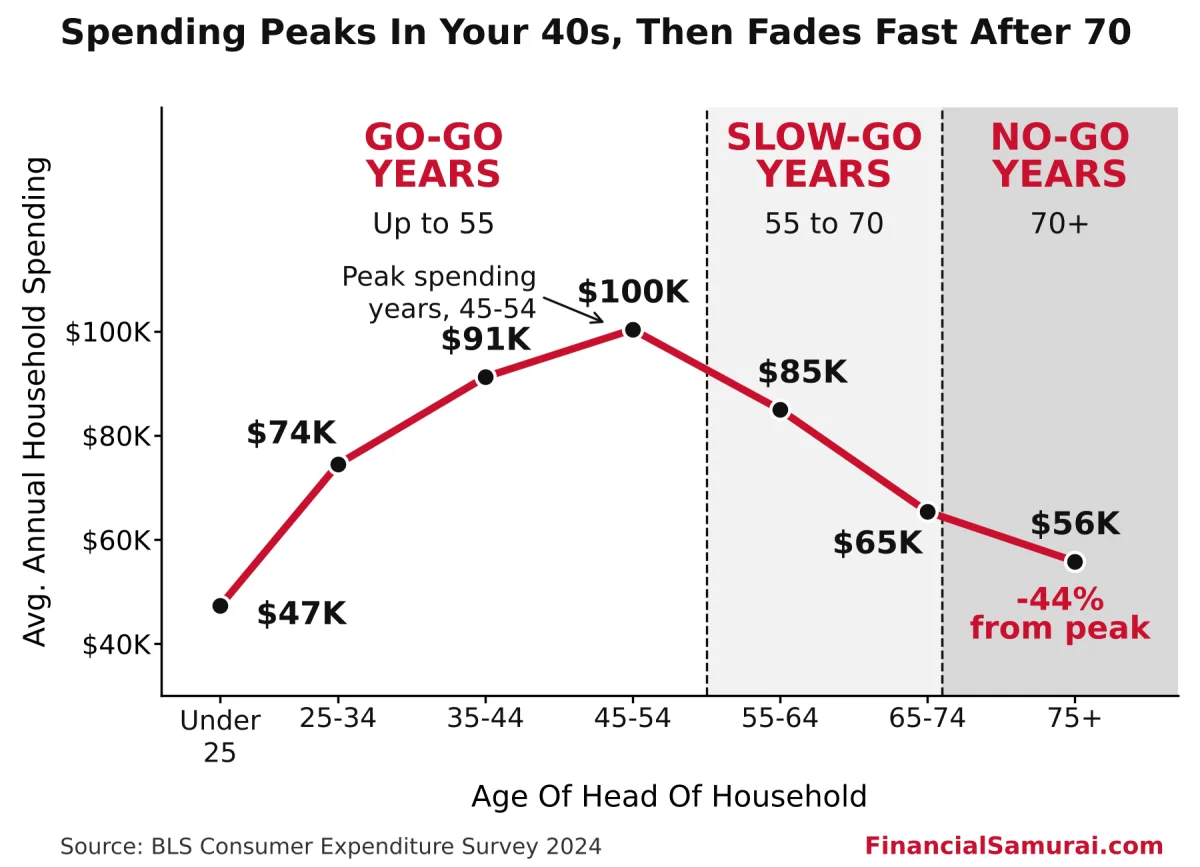
The gap between having money and wanting to spend it can widen with age. A writer who watched his parents decline travel and family outings despite having pensions and a paid-off home sees a personal finance risk that retirement projections can miss: the capacity to enjoy spending may shrink before the money does.
His account isn’t a forecast for every household. His parents appear content with a quieter life, and health, temperament and personal priorities shape how anyone spends. But their experience has changed how he thinks about saving, retirement and the years when discretionary spending might bring the most pleasure.
When the money is available but the interest isn’t
His parents once enjoyed cruises, one way they used their retirement wealth. After the pandemic, they stopped traveling. They told him they couldn’t be bothered and didn’t want to risk getting sick. He offered to pay for a cruise, including a balcony suite, for any length of time and to any destination. They declined.
The offer removed price as an obstacle, but it didn’t restore their interest. The writer first read that as a lost opportunity: he remembers the pleasure his parents took in their trips, and would like to see them enjoy similar experiences again. On reflection, he recognizes that their pensions mean they aren’t relying on this particular money to afford a trip. Their reluctance appears to come from changed preferences and concern about their health.
That distinction matters for retirement planning. A spending plan can show what a household can afford, but it can’t guarantee that a trip, a new car or a costly meal will still appeal when the time comes. Financial capacity and personal appetite are separate things.
Family outings show the same shift. One of the writer’s childhood memories is visiting Hanauma Bay with his father. When he took his own children there, he didn’t ask his father to join; he expected the walk down and up the hill would no longer suit him. His parents now prefer staying home and watching television.
The writer bought them a larger television after they had watched a blurry picture for more than a year, assuming their eyesight was the problem. He says the set cost less than $1,000, a relatively modest outlay for something they could use for years. In this case, money could improve a routine activity, even as a more ambitious outing held little appeal.
Small shared pleasures can outlast expensive plans
He also tried to bring his father into family game nights. Monopoly Junior held the children’s attention for a game before his son lost interest; after another round, his daughter tossed a game piece when she lost. Chess worked better. His father had played often in the past, and the children enjoyed facing him, even though they were beaten.
The games cost about $20 each at Target, and the family expects to play them repeatedly. The writer sees that as a useful contrast with travel: a low-cost activity created an evening together when a cruise did not interest his parents. Their current household spending, as he describes it, centers on food, taxes associated with required minimum distributions, home upkeep and property taxes. They have pensions, no debt, a television antenna rather than cable, and board games for shared entertainment.
He says the travel and major experiences that once featured in their retirement have largely disappeared. That doesn’t establish that they’re unhappy. It does show why a financial plan’s discretionary categories may not translate into actual purchases as someone gets older.
Saving habits can become hard to switch off
His parents were careful with money well before retirement. In the writer’s view, decades of restraint turned thrift from a practical response to a habit that’s difficult to change. He compares the way investments can compound over time with the way repeated financial choices can reinforce behavior: years of saying no may make it feel unnatural to say yes, even when circumstances improve.
He illustrates the point with an imagined example: a saver shown that they can spend an additional $50,000 a year may still hesitate over a $12 shave ice. The figures aren’t a claim about his parents’ budget; they capture his argument that knowing a purchase is affordable doesn’t automatically make it comfortable.
He sees a similar tension among people who pursue financial independence and retire early. The discipline that helps someone build a large portfolio can persist after the original need for restraint has passed. He says he knows friends with eight-figure wealth who still avoid replacing 11-year-old cars with electrical problems. His interpretation is that some continue acting from an earlier period when the expense really was out of reach.
This is a personal observation, not a rule about savers. Some people value a paid-off car or a simple home because those choices suit them. Still, the writer’s experience raises a useful question: does a low spending rate reflect a considered preference, or an old money habit that has outlived its purpose?
Family patterns can reappear across generations
At 49, the writer sees similarities between his choices and his father’s, despite differences in their careers. His father worked a regular job and came home around 5:30 or 6 p.m. The writer stopped working a day job five years before his son was born. Yet he also remembers that he and his father used to play golf whenever he returned to Honolulu. They haven’t done that in about a decade; his father lost interest and mobility.
The writer’s enthusiasm for golf has faded, too. He now plays only two or three times a year, usually when invited to a work outing or a club. He prefers pickleball and tennis, though injuries are increasingly a factor. Even hobbies that once seemed central can lose their appeal, while physical limits can narrow the activities still available.
He has never developed a habit of watching more than two hours of television a day and says he often watches none. He cut cable and has generally preferred creating content to consuming it. If he wants inexpensive entertainment later, he expects he may choose pickleball, the beach or hiking—activities he describes as free. But those options also depend on health and mobility.
He recalls facing a cash-flow squeeze when his wife wanted a Las Vegas vacation. He chose to go rather than let financial stress prevent the family from making a memory. The decision fits his broader concern: delaying every optional expense can protect a balance sheet while leaving fewer years to enjoy some experiences.
Housing and cars may not create much reason to spend
The writer’s parents have driven the same car for 28 years; his father was 54 when he began driving it. The writer is 49 and has owned his current car for 10 years, after buying it a year old. He expects to keep his next vehicle for a long time, too. The appeal of an expensive new car faded for him around age 32. Now he prioritizes reliability, safety and room for a family of four. He drives 6,300 miles a year and isn’t sure he’ll want a nicer car after his children leave home.
His parents live in a home his grandparents built in the 1980s, after removing an earlier house that had termites. It’s larger than they need, but works well when family visits, especially since the writer remodeled its two-bedroom in-law unit. Unless they choose a smaller condo with amenities, he doesn’t expect them to spend on a move.
He and his wife, meanwhile, consider their San Francisco home their long-term home after moving up the property ladder for 20 years. They don’t plan to buy a better home if they stay in the city. If they move to Honolulu, he says, they might buy a less expensive house because prices are more affordable there. Looking at these choices, he jokes that he may be following his father’s habits on a 33-year delay.
The window for certain kinds of spending may narrow
The writer doesn’t say that everyone should spend heavily after a particular birthday. His suggested timeline is personal: he sees ages 65 to 70 as potentially active if health holds, and says he watched his parents slow down after 70. He wonders whether concern about the high cost of eldercare contributes to their caution, but says he still needs to ask them.
In his parents’ case, he struggles to find purchases that would add much enjoyment beyond good food and fitness. He considers hiring a reliable house cleaner once a month for $500, though he expects that cost would come from their cash flow rather than their savings or investments.
He worries that his parents’ wealth may end up passing through a market decline or transferring to him and his sister, rather than supporting experiences they once enjoyed. He says he doesn’t want an inheritance; he has his own money and built his own business so he wouldn’t have to rely on theirs. To him, each unspent dollar represents something his parents might have chosen: a massage, a cruise or a more comfortable seat on a flight.
He says he would trade the remaining money for two more good years of his parents enjoying themselves. That’s an emotional judgment, not a calculation of what they should do with their assets. It points to the hard limit in any financial plan: money can pay for an experience, but it can’t ensure that a person has the health, energy or desire to take it.
From that experience, he argues that the years after 45 can be a useful time to spend more deliberately. He sees too much uncertainty earlier in life, when dependents and other commitments may still be growing, but believes the chance to enjoy travel and physically demanding activities can close sooner than people expect. His proposed 15-to-20-year window is a rule of thumb drawn from his own family, not a universal timetable.
He also says people who retire early may need to revisit plans that leave little room for spending. He believes a 4% or even 5% withdrawal rate has been too conservative since 2012, and says his own wealth is much higher than when he first retired. Those are his judgments about his finances and the period he describes, not guarantees about future portfolio performance. A household’s ability to increase withdrawals depends on its own assets, spending needs, time horizon and market experience.
Changing his own spending habits
The writer says observing his parents over two summers has prompted him to try harder to spend on things he values. He set aside $40,000 for a “Summer YOLO Fund” but spent only 20% of it. Even so, he says the target led him to spend more than he otherwise would have.
He says he used the remaining funds to invest in Mezzi, which he describes as an AI investment adviser he finds helpful. Private school is another expense he considers worthwhile, while his home is adequate for now and a more comfortable place in Honolulu remains a possibility.
Other potential uses for his money include replacing his car, paying for unusually expensive meals and giving more to charity. But spending itself isn’t his only source of enjoyment: investing has been a hobby for about 30 years, and he says it brings him pleasure. He also hopes to live long enough to help care for grandchildren, so he wants to put more money toward his physical and mental health.
That mix complicates any simple message to “spend more.” A person’s best use for money may be a trip, an activity, health care, family support, giving—or continued investment. The point is to recognize that accumulating assets isn’t the only goal, and that a purchase’s value depends on what the person actually wants and can enjoy.
Contentment complicates the lesson
The writer’s parents seem happy, or at least content. He doubts they would describe themselves as missing out on scuba diving or other activities they no longer pursue. That leaves him questioning whether he’s projecting his own priorities onto them: as a 49-year-old with a functioning body and a list of plans, he may see a calmer life as a diminished one.
He can’t tell from the outside whether their apparent contentment reflects genuine peace or adaptation to a lifetime of frugality. Their experience may not be a problem for them at all. That uncertainty is central to the story: a relative can identify opportunities for spending, but can’t decide for someone else whether those experiences still matter.
For his own planning, the writer’s takeaway is to prioritize experiences while he still wants them and is physically able to enjoy them. He encourages readers to consider whether a lifetime of saving has made discretionary spending harder than their finances require. The money may remain available later; the interests and abilities that give it purpose can change first.
Planning and protection
The writer also discusses two tools he associates with spending confidence: life insurance and retirement planning software. He frames insurance as a way to address a saver’s concern about providing for family, and says he has used Policygenius to compare coverage options. That mention reflects his personal approach, rather than a recommendation for every household.
He says he has used Empower’s financial tools since 2012 to track net worth, review portfolio fees and model retirement spending. He credits the planner with changing his view of a suitable withdrawal rate. He also notes that he has received a professional financial review after linking more than $100,000 in investable assets, and discloses that he is an affiliate, not a current client.
Models can help households see how spending assumptions interact with assets and time, but they can’t settle what a person will want at 75. The writer’s family offers a reminder to pair the numbers with an honest look at habits, health and priorities—and to revisit the plan as those change.


