FIRE’s Hidden Cost: Forgone Paychecks and $170,000 in Annual Spending
- Cargo
- Economy
- Shipped
- Shipper
- Financial Samurai
- Readers
- 655
Early retirement can mean years of missed income, costly healthcare and substantial family spending. One household estimates its annual cost at more than $420,000.
Early retirement can look frugal from the outside: an old car, economy flights and a person reading on a Wednesday morning. But the bigger financial choice is the paycheck that person gives up. One early retiree’s account puts the annual cost of that freedom at more than $420,000 when forgone base pay and household spending are counted together.
That figure reframes the familiar image of people pursuing financial independence and retiring early, or FIRE. Careful spending may help build the savings needed to leave work, but the decision to stop earning can be an expensive one. The question is less whether someone buys a new car and more what income, benefits and time they exchange for a different life.
The price of leaving a high-paying job
The author says that in 2012, his base salary was $250,000, with a discretionary bonus ranging from $0 to $500,000. He left work despite that compensation, giving up the salary and potential bonus in exchange for freedom from corporate politics, business travel, client pressure and meetings.
Over 14 years, he estimates that forgone base salary alone exceeded $3.5 million, before raises. Including bonuses, he puts the total compensation he walked away from at more than $7 million. Those are cumulative figures; the yearly comparison is what makes the trade-off especially striking. He says the forgone base salary is now more than $250,000 a year, before accounting for the possibility that it would have risen after 2012.
The calculation also excludes his wife’s forgone salary. That omission means the household’s full employment income trade-off would be higher, though the source gives no figure for it. The sums make clear why early retirement can’t be assessed by looking only at a retiree’s day-to-day purchases. Giving up a large, recurring income stream is itself a major cost.
Healthcare adds another bill. The family pays about $3,000 a month for unsubsidized coverage for four people, or $36,000 a year. The author describes this as far more than he paid for employer coverage. Leaving work therefore affects both income and the price of benefits, and those costs can weigh heavily on a household’s retirement budget.
There is a personal side to the calculation, too. The author compares walking away from work to paying each year for the freedom to read, travel, create or spend time with children. That framing doesn’t make the decision right for every household; it makes the exchange visible. The income is measurable, while the value of time away from work depends on what someone wants to do with it.
Spending choices reveal what matters
The author’s old car is a useful counterpoint to the spending elsewhere in his budget. After scraping its front right side on a bike rack, his first reaction was relief: he didn’t have to fret over another mark on an 11-year-old vehicle. He says that peace of mind in a busy city matters more to him than driving something new.
A reader had urged him to replace the car after he wrote about the cost of buying a new one. He considered whether keeping an aging vehicle with problems was excessive thrift, but concluded that a newer, more expensive car would bring stress he didn’t want. The choice isn’t proof that the whole household spends little. It shows that people can be careful in one category and spend freely in another.
The author argues that spending on what someone values is different from refusing to spend at all. He flies economy because paying more than $1,000 extra for a premium seat on a flight that usually lasts five hours to Hawaii doesn’t seem worthwhile to him. In his view, the extra legroom and wider seat don’t justify the cost when he can already write, eat, watch a film and nap in economy.
That distinction helps explain why a frugal reputation can sit alongside substantial expenses. A person may reject a costly car or airline seat while paying for a larger home, children’s schooling or delivered meals. The pattern reflects priorities, not necessarily an effort to minimize every outlay.
Housing and children drive the family budget
The household’s largest discretionary expense is its home, bought in 2023. The author says it cost about 75% more than the family’s 2020 home, purchased at the start of the pandemic. The newer property has extra bedrooms and bathrooms, an enclosed front yard where the children can play, and a larger lot with a view of the Golden Gate Bridge.
He says the family didn’t need those features, and that his wife was content with the prior home. Keeping it could have saved about $50,000 a year in property taxes, maintenance and insurance. He nevertheless wanted the larger home and persuaded his wife it was a good idea. His reasoning is tied to family life: he sees the years when the children are at home as a time to enjoy the property, with downsizing an option later.
Children are another large commitment. The author says that raising a child in an expensive coastal city can cost $1 million from birth through age 18, plus another $400,000 for college in today’s dollars. That puts the cited estimate at roughly $1.4 million through graduation. He also describes lower-spending possibilities: “only” $300,000 through age 18, or $500,000 through college.
Those estimates illustrate the range families may face; the source doesn’t present them as a bill every family will pay. The author’s own annual estimate for children’s living costs—including food, clothing, lessons and travel—is $16,000. He acknowledges that children can limit travel and redirect passive income from personal consumption, while saying that he and his wife wanted a family and chose to have a second child.
School and convenience add recurring costs
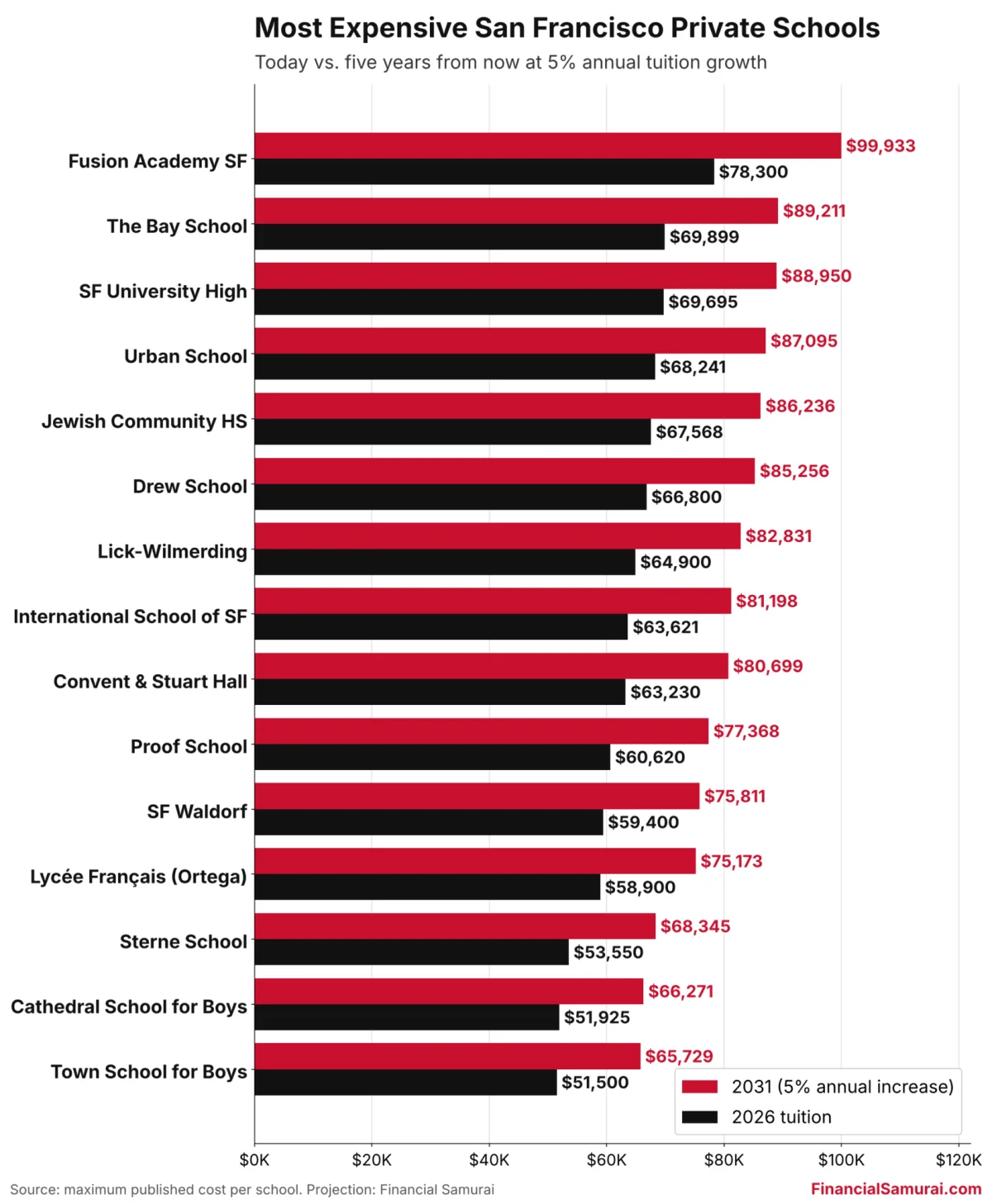
Education is another significant line item. Both children attend a language immersion school that costs about $46,000 a year per child, or roughly $92,000 a year for the two. The author says he regrets not taking Mandarin seriously while living in Taipei for four years as a child, and also regrets spending seven years studying Spanish without becoming fluent. Paying for language education now is, in part, an attempt to give his children an opportunity he wishes he had taken.
He’s still uncertain about the choice. He attended public high school, college and business school, and says he remains a believer in public schools. A less expensive route might be public education with a free language app; the family also homeschooled for 18 months during the pandemic. He says that experience cost patience rather than tuition, a reminder that lower cash spending can demand more time from parents.
Food delivery is the smaller but steady convenience expense. The family orders in a couple of times a week and has done so for more than 10 years. The author says grocery shopping and cooking could reduce the bill, but they prefer to spend that time elsewhere. He estimates the extra food spending at about $1,000 a month.
A $170,000 annual tally
The author’s estimates add up to $170,000 in annual discretionary spending. The list includes $50,000 for the more expensive home, $92,000 for school, $16,000 for children’s activities and living costs, and $12,000 for food delivery and restaurants.
Adding more than $250,000 in forgone base salary takes the annual comparison above $420,000. The author says this still excludes his wife’s foregone pay and assumes his own base salary never increased after 2012. The spending estimate is his household’s, not a typical FIRE budget, and it groups together expenses with different meanings: housing, education, children’s needs and convenience.
His broader point is that retiring early can involve both restraint and substantial spending. The family keeps an old car and chooses economy seats, yet pays heavily for housing, school and time-saving services. Meanwhile, leaving work carries a large opportunity cost, especially for someone who had high earnings and potential bonuses.
The decision turns on the value a household places on time away from work, alongside the ongoing costs it chooses to take on. An old car may signal a preference, not a low-spending life; a large forgone paycheck may be the most expensive part of retirement. For anyone weighing FIRE, the useful comparison is the full household trade-off: income and benefits surrendered, plus the costs that remain, set against the life that choice makes possible.


