Fragment’s Charlie Tang Focuses on Testing AI Agents for Procurement Work
- Cargo
- Economy
- Shipped
- Shipper
- Mark Pygas
- Readers
- 698
Fragment uses simulations built from production data to assess whether its procurement agents can handle complex business workflows reliably.
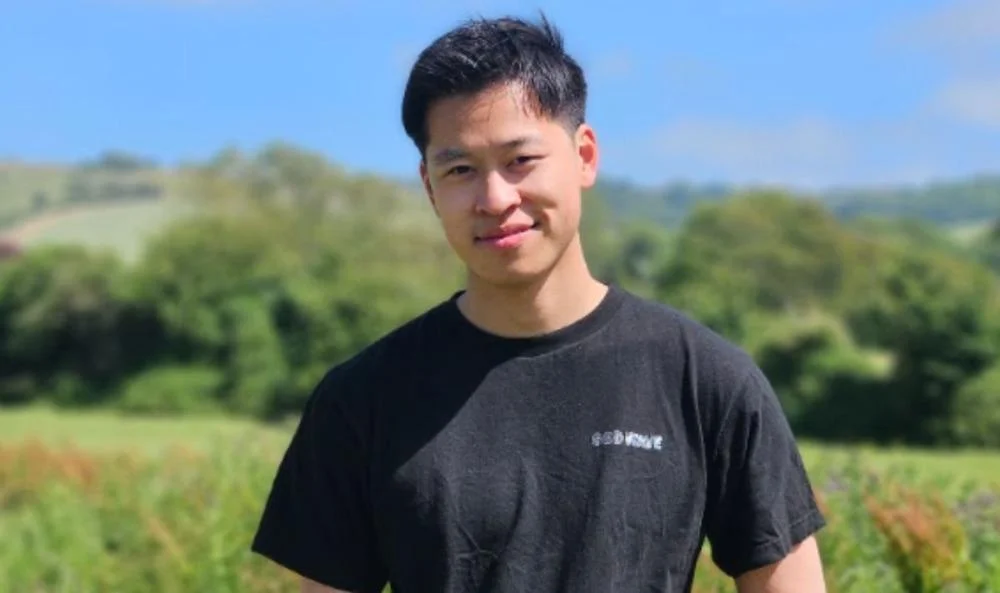
For AI agents to handle corporate procurement, a convincing demonstration isn’t enough. Businesses need evidence that a system can manage complex workflows and make decisions reliably, because mistakes can affect spending and the supply of goods. At San Francisco-based applied AI startup Fragment, founding engineer Charlie Tang leads work to test that reliability before customers depend on the agents.
The practical challenge is to understand how an agent behaves beyond a narrow set of expected tasks. Tang’s team builds simulated environments from real production data, then examines how the agents perform in conditions resembling business operations. The aim is to find weaknesses before deployment and give the team a clearer view of where a system may struggle.
From mathematical problems to trading
Tang grew up in the Netherlands and developed an early interest in difficult problems. He placed fourth in the 2019 Dutch Mathematical Olympiad and earned a bronze medal at the 2020 Benelux Mathematical Olympiad. At Utrecht University, he completed degrees in mathematics and physics in three years, graduating with honours in mathematics.
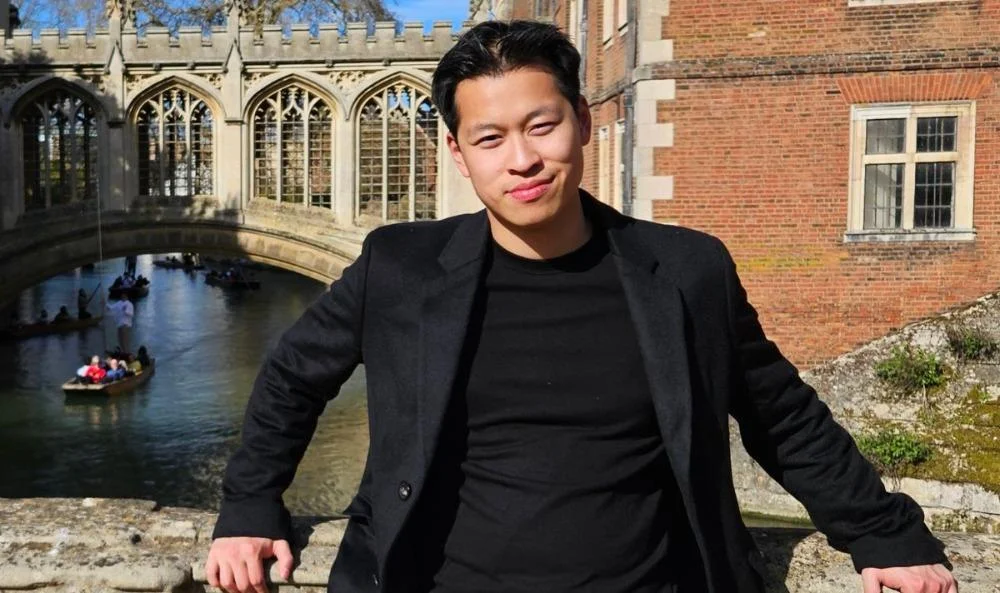
Trading brought a different kind of pressure. During his second year at university, Tang applied to Optiver and secured a summer internship. He returned to the firm full-time at the end of 2023 as a trader in its Amsterdam office. He describes the work as demanding and fast-paced, with a need to keep learning, take responsibility for the business and make decisions under uncertainty.
Those lessons now inform his approach to AI engineering. Evaluating an agent means considering how it handles changing conditions and incomplete certainty, not just whether it can finish a task when everything goes as expected.
A shift toward operational AI
By early 2026, Tang was looking for a new challenge. He had watched AI move from chatbots toward coding agents capable of writing and shipping software. That shift suggested a broader possibility: systems could move beyond generating responses and begin carrying out work, including tasks with financial and operational consequences.
Optiver offered a prestigious role and a clear career path, but Tang decided the chance to work on a rapidly developing field was worth pursuing. He resigned without another job lined up. Fragment came later, as he searched for a problem where AI agents could have a practical role.
Procurement stood out. Companies use it to buy the goods and materials needed to operate, yet many procurement workflows still involve repetitive manual work. Automating those processes could save time, but the stakes make reliability central to the task. An agent must navigate complicated workflows and respond appropriately when it encounters situations that weren’t anticipated.
Putting reliability under scrutiny
Fragment builds agents for enterprise procurement workflows. Tang joined as a founding engineer to help determine whether they can operate dependably in real business settings. The company has raised $45 million in a Series A, and its work addresses a question facing businesses considering autonomous systems: what evidence shows an agent can be trusted before it acts?
A controlled test can show that an agent handles a particular task, but it can’t establish how the system will respond to every variation in production. Real operating environments contain complicated data, exceptions and decisions whose consequences may only become apparent later. Performance on a limited collection of tasks may not reveal how an agent responds when the workflow changes.
Tang’s team uses simulations built from real production data to make testing more representative. The simulations let the team examine agent behavior across realistic business situations before customers rely on the system. That can expose limitations and failure patterns early, creating an opportunity to improve the agents before they handle actual procurement work.
In this approach, evaluation is part of development rather than a final box to check. A powerful agent has limited practical value if a business can’t establish how it behaves under pressure. The ability to assess performance against realistic workflows can help determine whether a system is ready for consequential work.
Funding and the longer view
Fragment has come out of stealth with $56 million in total funding, according to Axios and AI Magazine. The Series A was led by 8VC. General Catalyst and A* co-led the seed round, and Roelof Botha, former head of Sequoia, is also an investor. Fragment plans to use the funding to develop its technology, expand across source-to-pay and deploy with more large enterprises.
Tang’s longer-term ambition is to help make procurement a starting point for broader use of AI across the physical goods industry, including how products are sourced, made and moved. He also wants to become a world-class AI engineer and help shape expectations for how these systems behave. For Fragment, the immediate test is concrete: show that its agents can handle the complexity of procurement before businesses entrust them with goods and money.