HSBC’s Racquel Oden Says AI Can Expand Advisor Capacity, Not Replace Human Advice
- Cargo
- Banking
- Shipped
- Shipper
- James Brown
- Readers
- 410
AI is spreading across wealth management, but HSBC’s Racquel Oden sees rising demand and clients’ need for personal advice keeping advisors central.
AI is becoming a working tool across wealth management, but HSBC’s Racquel Oden sees its main effect as helping advisors serve more clients. Her argument rests on a widening advice need and the value clients place on personal judgment and one-on-one relationships.
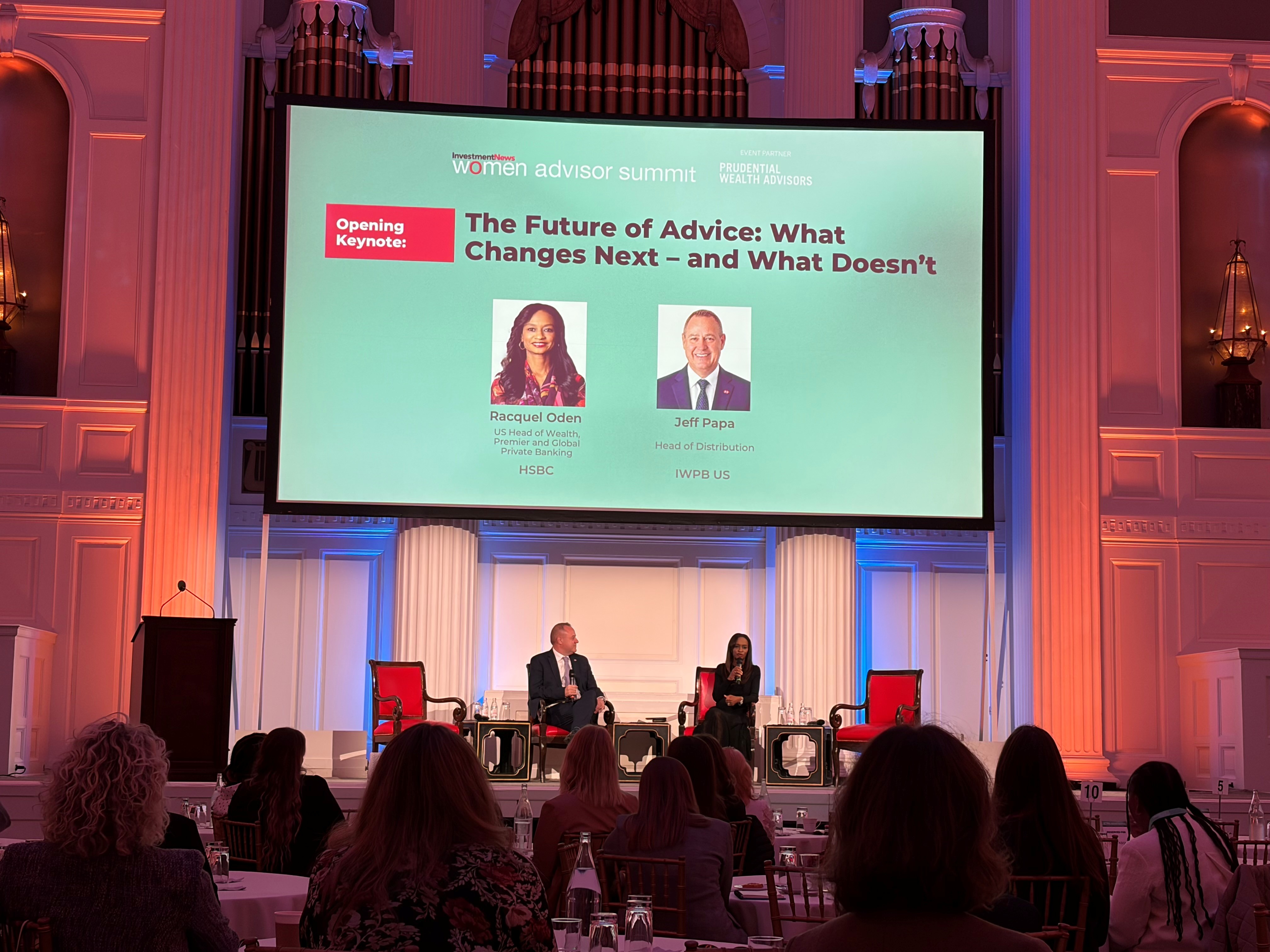
Oden, HSBC’s US head of wealth, premier and global private banking, made the case during the opening keynote at the Women Advisor Summit in New York City. “AI won’t replace advisors,” she said. “There’s a reason why – the level of advice needed.” She described the demand as a need and desire for “true, one-on-one” advice, suggesting that more accessible technology may increase the reach of financial guidance without replicating the human relationship behind it.
Demand and capacity are the central questions
Oden cited McKinsey & Co. data indicating that about 53 million people are looking for advice, with that number expected to reach about 75 million by 2030. The figures point to a capacity challenge for the profession: if more people seek advice, firms will need ways to handle routine work efficiently while preserving time for individual client needs. Oden’s view is that productivity gains from AI could help advisors do both.
She said the technology could make advisors more productive, giving them more room to meet clients and do one-on-one work. That benefit depends on how firms put AI to use. Saving time on tasks can create additional client capacity, but the value to clients will turn on whether advisors use that time for better conversations and tailored guidance.
The advisor supply issue adds weight to the discussion. Oden pointed to a shortfall of advisors in the US relative to the number of people seeking help. The scale of the gap matters for firms weighing technology investments: productivity tools may help extend staff capacity, while the need for experienced human judgment remains part of the service clients are seeking.
Adoption is rising, with efficiency gains reported
Morningstar research found that 80% of advisors now use AI in some form, up from 67% last year. In the same research, 48% of surveyed advisors said AI had significantly or moderately improved their efficiency, compared with 36% last year. Those results suggest adoption is spreading and that a larger share of users see a practical benefit. They don’t establish that every use case produces the same gains, or that saved time automatically becomes additional client service.
Oden also identified a limit: AI lacks emotional intelligence, she said, and developing that capability will take generations of the technology. Her point puts a boundary around the productivity case. Software may help with parts of an advisor’s work, while conversations that require empathy, interpretation and trust continue to rely on people.
Other speakers at the summit focused on the choices firms and advisors face as adoption expands. Lisa Salvi, head of business consulting and education at Schwab Advisor Services, urged women advisors to get involved and learn through use. “Nothing at all can replace trying it,” she said. Salvi said she had hosted events, roundtables and AI summits, and wanted to see more women attend.
Denise Milano Sprung, chief marketing officer at Mitlin Financial, raised a workforce concern: firms that fall behind on AI could find advisors leaving for competitors that are more comfortable with the tools. “It’s moving at such a quick pace,” she said. For advisors at firms lagging in adoption, she added, “it may be time to look for a new job.” Her comments frame technology as a factor in recruiting and retention as well as a way to improve day-to-day efficiency.
Firms are testing different uses
Research released in January by Schwab Advisor Services found that 63% of independent registered investment advisor firms were using AI in some capacity. The study was conducted in late 2025, and that share was more than double the 2023 level. The figure points to a fast change in practice, although “using AI” covers a range of activities and doesn’t by itself show how deeply firms have built the technology into their operations.
Stacy Francis, president and CEO of Francis Financial, described using AI to review a client meeting that had not gone well. She asked her “very critical” Jump notetaker for feedback on her approach and said the response surprised her: “I was like oh my god, you’re right!” Francis said she saw “a lot of really good pieces that we can use.” Her example illustrates a distinct use from automating routine work: a tool can also give an advisor another perspective on their own performance, while the advisor remains responsible for judging and applying the feedback.
The summit brought together more than 20 speakers across more than 10 content sessions on Nov. 5 at 583 Park Avenue on Manhattan’s Upper East Side. It concluded with the Women to Watch Awards, which recognize influential women in wealth management. Prudential Wealth Advisors was the headline partner for the events.
For wealth firms, the evidence points to two questions that will remain linked: whether AI creates enough efficiency to expand client access, and whether advisors can preserve the personal judgment clients expect as they use it. Rising adoption and reported efficiency gains show that firms are moving beyond curiosity. Oden’s case is that the technology’s lasting value will be measured by the additional time and attention it gives advisors to meet a growing demand for advice.
Related reading: AI financial advice and demand for human advisors among Gen Z; advisor AI use and client time; questions for advisors using AI; AI use among independent RIAs; Schwab Advisor Services research; Schwab research on RIAs and AI; Stacy Francis on mentorship and sponsorship; Prudential Wealth Advisors and the summit; McKinsey & Co. research on advisor supply.